
Getting started
Why try a trail race?
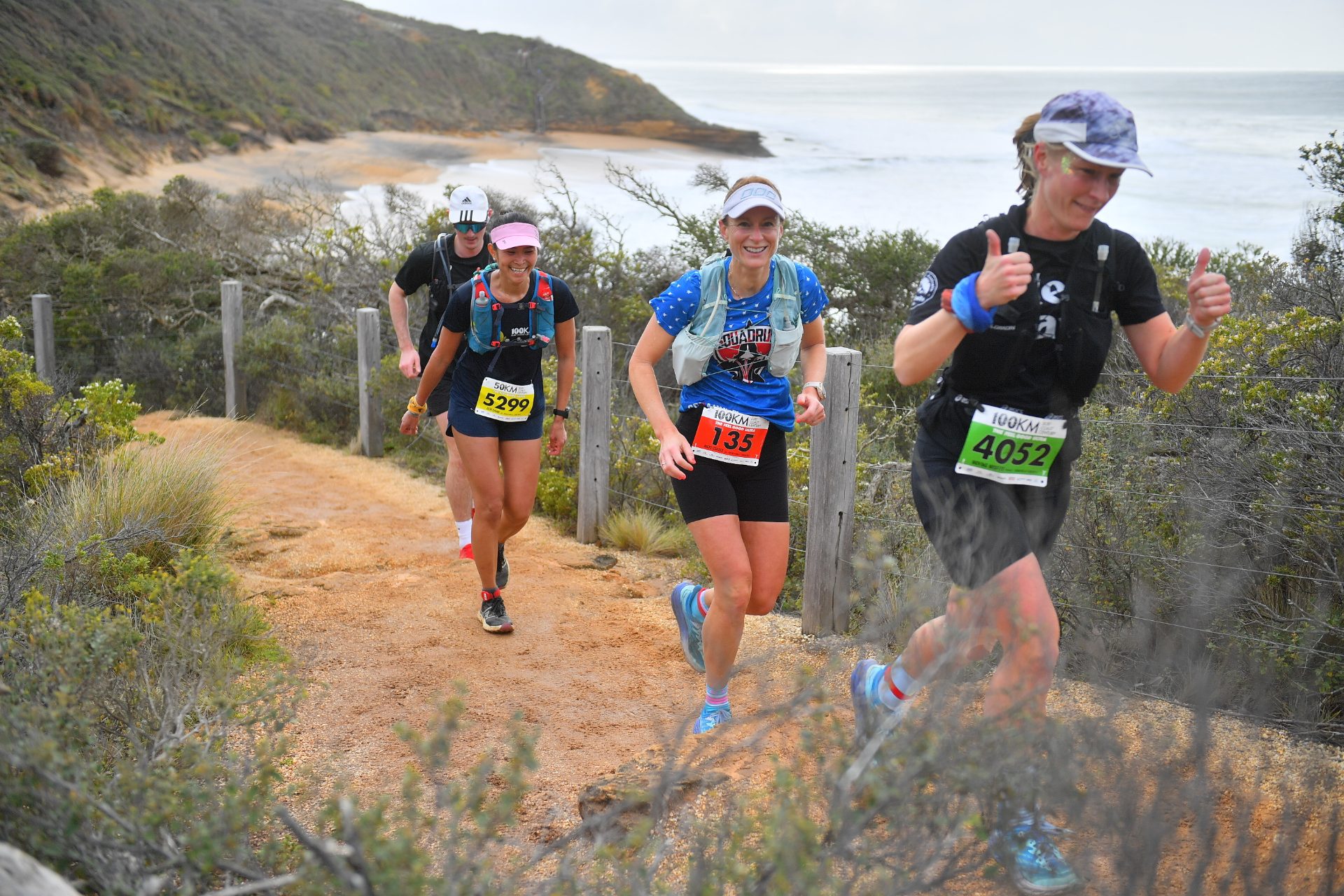
Why try a trail race? The places, people and experience
From exploring new places to meeting other runners, there's plenty to enjoy about taking your next race off-road.
If you've mainly taken part in road races, trail racing offers a different kind of experience.
There are hills, uneven terrain and sometimes a fair bit of mud. Your pace will probably be slower than on the road, and you might find yourself walking sections you'd normally expect to run.
But there are also incredible places to explore, new people to meet and a different kind of challenge to enjoy.
1. Explore places you might not otherwise visit
One of the best things about trail running is where it takes you.
You might find yourself winding through forests, following coastal paths, climbing mountains or discovering waterfalls and lookouts you never knew existed. Races can take you along quieter tracks and into places you might not otherwise explore.
And because you're covering more ground than you might on a short bushwalk, you can experience a huge variety of scenery in a single morning.
On technical sections, you'll need to pay attention to where you're putting your feet, but on easier stretches there's time to look up and enjoy the views.
Keep an eye out for wildlife too. Spotting a wallaby, echidna or an interesting bird along the trail can be one of the most memorable parts of your day.
2. Be part of the trail running community
The sense of community is one of the things that draws many runners to trail racing.
You might start the day surrounded by people you've never met and finish having shared kilometres of conversation, encouragement and laughter.
Steep climbs and slower sections can be a good opportunity to chat with other runners, whether they're taking on their first trail race or have completed dozens of ultras.
It's worth asking if they've run the course before. They might have useful advice about an upcoming climb, a tricky descent or a particularly beautiful section to look forward to.
And sometimes those conversations turn into friendships that continue long after race day.
3. Walking the hills is part of the experience
One of the differences between road and trail racing is how often you'll see runners walking uphill.
Even elite trail runners regularly switch to hiking on steep climbs. It's often the most efficient way to cover the terrain, particularly over longer distances.
Part of trail racing is learning when to run, when to hike and how to pace yourself over changing terrain.
4. There's more to a race than your finish time
Road races often lend themselves to chasing a particular pace or personal best. Trail races can offer a different kind of challenge.
Your pace might change dramatically throughout a race depending on the terrain. A smooth, flat section could be followed by a steep climb or a rocky descent that requires more careful footwork.
While there's certainly a competitive side to trail racing, for many runners the experience is just as important as the result.
Ask a trail runner about a race they've completed, and they might remember the sunrise over the mountains, an unexpected wildlife encounter or the person who helped them through a difficult section more clearly than their finish time.
Those moments, and the people you share them with, can be what stays with you long after race day.
5. A supported way to explore new trails
One of the advantages of entering an organised trail race is the support that many events provide, particularly when exploring unfamiliar trails.
Depending on the event, this might include:
- A marked course to help you find your way
- Aid stations with water, food or other supplies
- Volunteers and marshals along the route
- Medical assistance and emergency procedures
- Other runners sharing the trails
The level of support varies between events, and you'll still need to prepare properly, carry any required equipment and understand the course.
But a well-organised race can be a good way to explore somewhere new with more support than you'd typically have on a solo run.
6. There's a wide range of events to choose from
Trail racing doesn't have to mean signing up for a 50 km ultra.
There are plenty of shorter events, including 5 km and 10 km races. Some follow relatively smooth, gently undulating paths, while others include steep hills and more technical terrain.
It's worth looking beyond the distance when choosing an event. Elevation, terrain, cut-off times and course descriptions can make a significant difference to how challenging a race will feel.
With such a variety of events available, there's plenty of opportunity to find something that suits your experience, fitness and interests.
Ready to try a trail race?
At Her Race Report, we're bringing together information to help women discover and compare trail races, including course details, cut-off times, women's participation, finishing times and race-day facilities.
Or, if you'd like some help finding an event that suits you, read our guide: How to choose your first trail race.
Ready to find a race?
Compare women's participation, pace and race-day facilities.